


There are many different views on the definition.Some experts believe that it would be more correct to use the general name - back pain or non-specific back pain.The difficulty in definition is also due to the many specialists who work with this disease - neurologists, orthopedists, neurosurgeons and general practitioners.Sometimes a person diagnosed with osteoarthritis of the spine will see a cardiologist, because the symptoms of the disease are very similar to pain in the heart.
The term “spondylosis” was proposed by Hildebrandt in 1933 as a multifactorial degenerative disease of the spinal motion segment.
Spondylosis is a pathological process in the spine characterized by degenerative-destructive disorders of the vertebrae and intervertebral discs.The danger of the disease is due to the hidden course of the process;Upon admission, the patient enters the complications stage, when severe pain begins.
Causes of osteoarthritis
Spinal degeneration occurs due to the influence of factors that affect the human body.Factors that stimulate the development of osteonecrosis: Genetics;back injury;congenital or acquired defects in the structure of the musculoskeletal system (flat feet, changes in posture);metabolic failure due to diseases of internal excretory organs;Poor nutrition and being overweight;The disease does not discriminate by gender.viral and bacterial infections;lifestyle: lifting and carrying heavy objects, working in drafty conditions, exposure to constant vibration, physical inactivity;constant psycho-emotional overload;Bad habits: smoking, drinking alcohol, taking drugs.
Spondylosis: types
Osteoarthritis of the spine is divided according to the level of damage;Each type has its own characteristics and treatment characteristics.
Osteoarthritis of the lumbar spine.
The most common back disease is osteochondrosis in the lumbar region, which is associated with heavy loads in this particular region.Vulnerable to complications such as disc protrusion and single and multiple herniations.In case of complications, it may be accompanied by dysfunction of the pelvic organs and muscle atrophy of the lower limbs.
Cervical spine degeneration
Second place in the classification of back diseases.Pathological processes develop due to a sedentary lifestyle and increased load on the shoulder muscles.The neck muscles need special training, without them they will not be able to withstand the load due to poor development.
Osteoarthritis of the thoracic spine
Back pathology is the rarest because this area has poor mobility and the abdominal muscles are most developed.It is difficult to diagnose due to its long-term asymptomatic course and similarity to other diseases (coronary artery disease, intercostal neuralgia, lung disease).
General process
Pathology that affects several departments at once, occurs rarely and is based on congenital diseases of the musculoskeletal system and is practically impossible to treat.
Stages of osteoarthritis and possible complications
Osna proposed a description of the four stages of spondylosis in 1971. They are not used to make a diagnosis but do allow us to understand how the disease progresses.
- The intervertebral disc becomes less elastic.The disc may be slightly deformed;The inner nucleus pulposus moves inside the disc.This stage shows absolutely no signs or mild pain.
- In the second stage, cracks may appear in the disc and the surrounding ligaments weaken.The connection of the vertebrae becomes unstable.Acute pain that reduces the ability to work occurs.
- The third stage is characterized by complete damage to the intervertebral disc.When the nucleus pulposus extends beyond the disc, a disc herniation occurs.Spinal deformity or nerve root compression may occur.
- At the fourth stage, surrounding tissues are affected - vertebrae, ligaments, spinal membranes.As a result, the spinal segment may lose complete mobility.
Due to spinal bone degeneration, various complications may arise in some cases.Disc problems, herniation and protrusion can lead to spinal stenosis, spinal cord compression and disability.
Depending on the level of damage, various problems related to the nerve roots can occur.These are intercostal neuralgia, disorders of sensitivity and motor function of the upper and lower limbs, and dysfunction of internal organs.Inflammation of the sciatic nerve, or sciatica, not only causes severe pain but can also lead to pelvic problems and infertility.
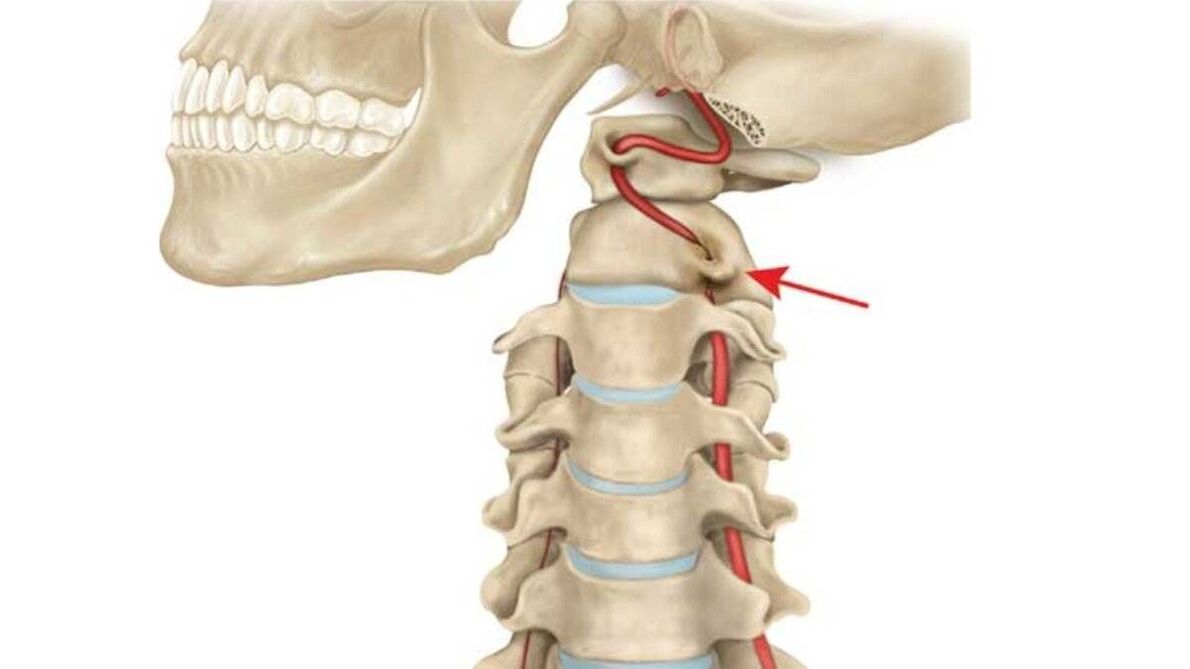
In addition to nerve roots, cartilage degeneration can cause compression of vertebral vessels.If blood flow is interrupted in the vertebral arteries that run in the neck area and supply blood to the brain, brain disorders, problems with vision or hearing, breathing or heart function may develop.
Diagnosis of osteoarthritis
Within the framework of official medicine, the diagnosis of osteoarthritis includes an examination by a neurologist to determine the degree of damage to the nerve roots, checking reflexes and sensitivity.
The following instrumental methods can be used:
- Vascular ultrasound can reveal the extent of circulatory disorders, for example in the vertebral artery;
- X-ray of the spine;
- CT also uses X-ray imaging, but allows you to build a three-dimensional image of the area being studied and detect even small displacements of the vertebrae;
- MRI specializes in the study of soft tissues, allowing you to evaluate the condition of the spinal cord and visualize the internal structure of the intervertebral disc.
For differential diagnosis, laboratory tests, general blood and urine tests and calcium metabolism are used.
Treatment of osteoarthritis is very complex.
- The first and very important remedy in the treatment of osteoarthritis is lifestyle.Normalization of working conditions, moderate and regular exercise, as well as healthy sleep significantly improve the patient's condition.
- To treat spondylosis with medication, a neurologist or general practitioner may prescribe medication.Non-steroidal anti-inflammatory drugs are most often prescribed - this is the standard treatment for spondylosis.They relieve pain and reduce inflammation.Muscle relaxants help reduce muscle spasms.Vitamins and antioxidants are prescribed to protect nerve tissue from damage.However, any medication has side effects, for example NSAIDs can negatively affect the stomach.
- In addition to medication, physical therapy is used, such as massage for spondylosis, as well as manual therapy.In cases of severe complications of osteochondrosis, surgery may be required, but is only indicated if long-term conservative treatment is ineffective.